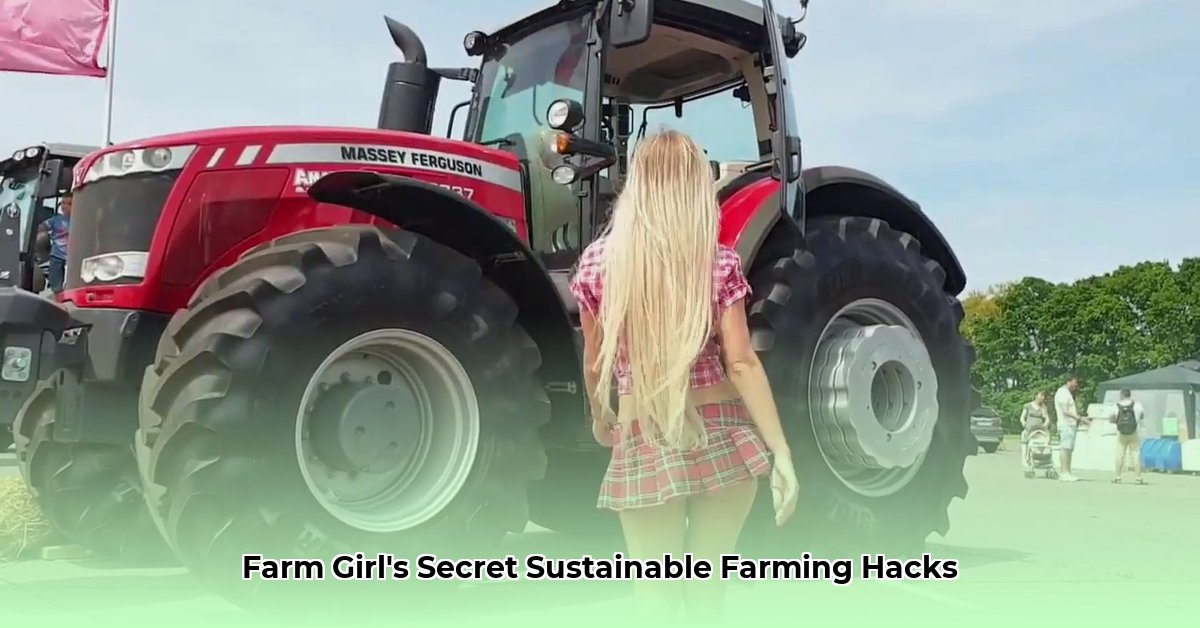
Lacy's Innovative Approach to Sustainable Agriculture
Lacy, a forward-thinking farmer, is revolutionizing sustainable agriculture through innovative techniques and technology. Her methods demonstrate that profitable farming can coexist with environmental responsibility. This isn't just about pretty pictures; it's a comprehensive strategy built on several key pillars. Isn't it fascinating how technology can be wielded to protect our planet? See more examples of sustainable farming practices here.
Nurturing Soil Health: The Foundation of Success
Lacy prioritizes soil health, recognizing its pivotal role in a thriving farm. She focuses on building rich, vibrant soil teeming with life, reducing the need for chemical fertilizers and promoting stronger, more resilient crops. This holistic approach mimics nature's processes and leads to more sustainable agriculture. Her techniques include cover cropping (planting specific plants to improve soil health, like giving the soil a cozy blanket) and clever crop rotation, which bolsters nutrient levels and manages pests. Why is soil health so important? Because it's the ultimate foundation for sustainable and productive farming.
Water Management: Every Drop Counts
Water conservation is critical in agriculture. Lacy employs drip irrigation, delivering water directly to plant roots to minimize waste. She also monitors soil moisture levels using technology to fine-tune her irrigation, ensuring every drop serves its purpose. This precision ensures efficient water usage and reduces the environmental impact of farming. How does this approach enhance sustainability? By maximizing efficiency and reducing water waste.
Integrated Pest Management: Nature's Defense System
Lacy utilizes Integrated Pest Management (IPM), a natural approach that prioritizes preventative measures over harsh chemicals. By introducing beneficial insects and employing crop rotation, she outwits pests while protecting the environment and reducing reliance on harmful pesticides. What are the long-term benefits of IPM? Reduced pesticide use, healthier ecosystems, and lower costs.
Precision Farming with the Farm Girl Lacy Tractor
Lacy utilizes a state-of-the-art tractor equipped with GPS and sensors for precision farming. This technology optimizes planting, fertilizing, and harvesting, minimizing waste and maximizing efficiency. This high-tech approach contributes to a smaller environmental footprint and increased yields. How does technology play a role in achieving greater sustainability in farming? Precision farming techniques drastically reduce waste and optimize resource use.
Lacy's Inspiring Legacy: A Movement for Sustainable Farming
Lacy is more than a farmer; she's an inspiration. She actively shares her sustainable farming techniques, motivating others to adopt eco-friendly practices and challenging the traditional approach. She's proving that success and sustainability can be mutually reinforcing. What makes her story so compelling? It showcases how tradition and innovation can complement each other wonderfully.
Implementing Lacy's Sustainable Farming Practices: A Step-by-Step Guide
- Soil Assessment: Begin by testing your soil to determine its health and nutrient needs. (This helps tailor practices to your specific land.)
- Strategic Crop Selection: Choose crops suited to your climate, soil type, and water resources. (This maximizes yields and minimizes stress on resources.)
- Precision Irrigation: Implement a water-efficient irrigation system, such as drip irrigation or variable rate irrigation. (This reduces water waste and boosts efficiency.)
- Integrated Pest Management: Utilize IPM methods to control pests naturally, avoiding harmful chemicals. (This protects the environment and promotes biodiversity.)
- Continuous Monitoring: Track your progress, assessing the efficacy of your methods and adapting as needed. (This allows ongoing refinement for optimal results.)
Balancing the Benefits and Challenges of Sustainable Farming
| Advantages | Challenges |
|---|---|
| Reduced environmental impact | Higher initial investment in sustainable technologies |
| Enhanced crop resilience | Potential increase in labor intensity |
| Improved biodiversity | Potentially lower yields initially |
| Greater profitability in the long term | Requires thorough understanding and training |
Remember, the specific approach varies depending on local conditions. The key is embracing a holistic strategy that prioritizes both productivity and sustainability. This adaptable framework offers a practical path towards environmentally responsible farming.